Showing posts with label brain training. Show all posts

Thursday, September 12, 2013

Persuasion - one step at a time

A week or so ago I broached the subject of attending the Arrowsmith program with A-One.

A-One: Well I'm not going!

Mum: A-One, this program could really help you!  For example, if you wanted to do a course at TAFE, you could find it easier than when you were at school.  It could help you learn better.  You remember that you found writing difficult at school?  It could help you do that better.

A-One: I didn't find writing difficult.  It was what to write.

Mum: Yes, that's right.

A-One: Anyway, I'm not going!

Mum: This is very serious A-One.  When we're gone, what will you do? Where will you live? How will you get your groceries? Who will help you manage your insurances? Health cover? Tax returns? Your pension?  It's not right to those who love you, nor to the Australian public who fund your pension, if you don't take up an opportunity which may help you be able to do those things for yourself!  Surely you'll at least try it?

A-One: No, I'm not doing it!

Mum: This is so serious, we'll have to start thinking about making it a condition of you living in this house.

A-One: You can't do that!

Mum: You are 23 years of age and you need to be thinking about living more independently.

A-One: I'm not going anywhere!

Mum: What are you objecting to so much?

A-One: I don't need it.

Mum: And yet you don't have a job, nor a driver's licence, nor able to take on responsibilities that others your age are already doing.

A-One: That's not my fault! Employers should give me a job!  They should give me a chance!

Mum: Don't you want to give yourself the best chance?

A-One: Yes, but I'm not that bad. I don't need it.

Mum: That's right. You're quite capable of many things. But this program is for people who are already good at some things, but have some blockages in their brain that stop them from doing other things.

A-One: I'm not doing it.

Mum: A-One. Has it been your experience that people often get frustrated with you? That they lose patience with you? For all your life so far?

A-One: Yes.

Mum: Do you want it to be that way for the rest of your life?  Do you think we want it that way? There's a chance your life could be different in a way you don't yet know. Don't you think we'd want your life to be one where people no longer get impatient with you?

He started giggling.  Not because he found it funny. It was his emotive response.

A-One: Stop talking about it.  I'm not doing it.

Mum: Well, you've assessed that you don't need this program.  What about the people who are offering the program?  Don't you think they'd be able to tell whether you're a suitable candidate?  If we put in an expression of interest, that doesn't mean you'd automatically be doing the program.  They might decide that it wouldn't really help you, and you'd be right after all.  Couldn't we at least see what they say?

I can't quite recall if he said anything after that. It seemed to me he was still intransigent, so I thought I'd draw round one to a close.  I knew it would take some time for him to get used to the idea, even if just to agree to an expression of interest.

That evening, his father said to me simply, 'He's doing it.'  He went to A-One's room to talk it over with him.

After about 20 minutes, his father reported that A-One had agreed to the expression of interest.

The chorus (A-One's youngest sister) commented: Gee, I was expecting there to be shouting and tears over this tonight, but it was all very calm and controlled. Wow.



I'm not sure where the magic happened.

A-One may be right.  This program may not be the right one for him.  It's for people with average or above average intelligence, and in the past A-One's tests put him at low average - yet still in the average range.

At least we have a chance to find out now.


Thursday, August 8, 2013

Status Check

A-One hasn't done much brain training over the last month - just one day in the last four weeks.  His last score on Lumosity was 45th percentile, comprising the following sub-percentiles:
  • Speed: 72.4
  • Memory: 60.1
  • Attention: 46.8
  • Flexibility: 53.9
  • Problem Solving: 9.1
All of the above are well within the average range, except Problem Solving.  I reckon his overall BPI would be higher than 45th percentile if he learnt his number facts.

So, has anything changed for A-One from his brain training?

When he met with his employment consultant yesterday discussing kitchen hand work, I noticed that he worked out how many years he'd been cleaning up the kitchen at home when I said he'd been rostered on that job since he was at least 8 years old.  Next week he turns 23.  He casually slipped into his conversation 'So, I've been doing that for 15 years.'  No pause, no counting on fingers.

I've also been noticing that his conversations as he plays WOW with his online friends are quite coherent and not all one-way.  Quite different from just a few years ago when he'd get on to a topic and keep talking regardless of signals that it was time to let someone else speak, or to inquire after them.  It all sounds very regular to me.

He now needs to build his confidence, and become motivated to get out of his comfort zone at home.

The best laid plans ...


At his meeting with his employment consultant yesterday, A-One reported on the job ads he had found interesting over the last fortnight, even if just a little.

A-One: There was one that required some packaging of orders, with some reception and admin work.  But they wanted someone who could 'work under pressure', and 'answer phone calls at reception'.

Consultant: Let me stop you right there.  How do you know if your idea of pressure is the same as their idea of pressure? You don't really know until you try.  When you think maybe you can't do it, I want you to put those thoughts away, and give it a go.  It's a good to be in the habit of applying, and good practice if you get an interview.  And when they say they want experience? Remember, you say you are willing to learn.

A-One: Yes.

Consultant: As you say, you might not find cleaning jobs really interesting, but you need to start somewhere, and from there you can work on to other jobs that you like better.

Mum: Yes, over the last fortnight, I heard A-One say for the first time ever 'working my way up'!

Consultant: Yes, that's how it can work. Will you get to your 8 employer contacts for our next meeting?

A-One: Yes, I'll do that.

On the way home, the plan had been to go via the shopping centre so that A-One could drop in his resume at his targeted shops (electronic gaming), as well as be on the look out for those looking for staff.

Mum: We'll just stop by home first so that you can swap the thongs for some shoes.

A-One: So, we're going home first now?  ... I really need a haircut too.

Mum: We could do that right now if you like.

A-One: OK.   Now, (consulting his iPod notes) how do I pay for this with my card again? Do I press credit or savings?

The haircut and payment duly executed, we headed for the 'quick' stop at home. He headed for the toilet.

Thirty minutes later:

Mum: A-One, how long will you be?  We'll run out of time!

A-One: We won't do it this afternoon.

After he emerged, he sat at his computer:

Mum: So when do you want to go down to the shopping centre?

A-One: I don't know.

Mum: If you need my help to get there, or to help you practice what to say before you talk to employers, you need to give me a time.  But if you go there on the bus, or walk, then it's up to you.

A-One: I don't know!  I need to think about it.

Mum: OK. How long do you think you'll need to think about it?

A-One: I don't know!

I moved on to something else.  Another day, another try ...


Arrowsmith in Brisbane!


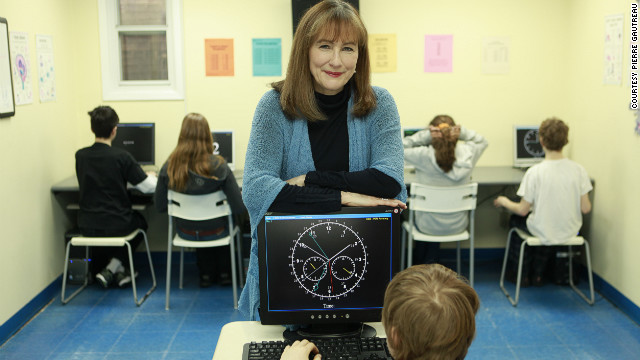
The very good news is that the Shaping Brains Project of The Benevolent Society has now signed up for the Arrowsmith program at the Acacia Ridge Early Years Centre. The program will be for children - but for adults too!  Sheryl Batchelor emailed me with her exciting news a few days before she went to Toronto for her training.  She will be starting the candidate selection process when she comes back.


I'm sooo hoping that A-One will be a suitable candidate.

I chose my time to tell him about the program coming to Brisbane, because he hadn't shown any enthusiasm for it when I've raised it with him before.

Mum: A-One, you remember the Arrowsmith program? Well, it's now going to be available in Brisbane.

A-One: Well, I won't be going.

Mum: I think it could help change your life.  Even though we don't know that for absolute certainty, I still think it's the best thing that I've seen that could help you.  You could start thinking about a sound engineer course at TAFE or even something else if you wanted to.  The program could help you to learn and to write more easily - to be able to handle a course so much better than when you were at school.

A-One: It's not necessary.

Sisters: So what are you going to do if you don't do this?

Mum ... and Dad: You know the people who usually do the course are just normal, intelligent people. They just have some blockages in their otherwise perfectly fine brain, and they want to work to remove those blockages so that they can make the best use of the already good parts of their brain.

Grandparents:  A-One, this is very exciting for you.  You'd be at the cutting edge of a new frontier!

I think he'll come round.

Monday, July 29, 2013

Testing

A-One and I have finally completed his practice and baseline tests using CogStateTM.  For him to have had sufficient sleep it usually means he's free in the afternoons, but I'm not always free then.  In my attempts to co-ordinate our schedules I'd occasionally hear faint mumblings of ... 'not important' ... but, in the end, he submitted relatively graciously.

To administer the tests I was required to read the instructions while they were also presented to him on the screen.  For the practice tests, he usually read ahead and pressed on without waiting for me to finish the instructions.  Except the working memory tests - he read and re-read them before proceeding.

For the baseline tests, because they are timed and should be done without significant breaks, I asked him if he needed a glass of water or to use the toilet before we started.  He decided he did.

An hour later (sigh) we got started.

Again I read the preparatory instructions, reminding him that the tests were the same as the practice tests, just different in the specifics so that they are still 'fresh'.

Mum: Are you ready to start?

A-One: Not yet.  I'll let you know.

A minute or so passed.

Mum: Are you ready yet?

A-One: No.  I'll let you know when I am.

A minute or so passed.

Mum: How about now?

A-One: No. Not yet.

Mum: Are you composing yourself, getting your mind ready for this?

A-One: Yes.

The first baseline test was to remember a shopping list.  As I started to read out the items, he burst out, 'Aren't these meant to be the same words as before?'  So we used up some seconds as I explained that the test is the same, but the words are different.  That's what the 'composing' time had been about - trying to remember the words from the practice test!

For most of the tests again, he pressed on without waiting for me to finish reading the instructions, except for the more challenging of the working memory tests.  We completed all the tests in about an hour and fifteen minutes. My observation, supported by the test results, showed that his working memory is quite good. When tests required that he 'work out' a rule or find a path in a maze, he performed better than when he had to remember many things short term.  But for anything that had made it into his memory, his delayed recall was then good.  This is consistent with our experience of him - it might take a while for something to get into his brain, but once it's there, it's there forever!  So it sounds to me like he would benefit from practising learning things off by heart - not so much to know many more things, but to practice the learning technique required to remember things.

Mum: Do you want to see your test results?

A-One: Nah.

Pondering the good working memory results, and recalling that his previous neuro-psyche tests indicated a weak working memory, I asked him if he was willing to do a little exercise that would take only a minute (a working memory test).

Mum: I'll give you five numbers and I want you to repeat them back to me - backwards.

A-One: OK.

Mum: 7    3     9     5     8

A-One gazed down with a look of concentration on his face.  After about 15 seconds he looked at me and giggled.  He looked down again for about another 10 seconds.  Looked up, giggling again.

Then, tumbling the numbers out in quick succession:

A-One: 85937!


Saturday, June 22, 2013

Arrowsmith advocacy

Last week, Debbie Gilmore, the Arrowsmith program's Australian representative, distributed the email addresses of people wishing to form an advocacy group to bring an adult Arrowsmith program to Queensland.

I'm keen to work with others to see how we can progress this. To that end I've emailed the group, as has one other in the group.


The policy of the Arrowsmith organisation is to not make public the discussions they have with any educational institutions considering the program until they have formally committed to the program and/or are happy to have that made public.  Advocates are not bound by that policy because they do not represent the Arrowsmith organisation.  However, I see the prudence in adopting the same position, so in this blog I'll write only in general terms about such advocacy.

The exciting news is that two more Australian schools have now agreed to offer the program:
The Arrowsmith website lists both Participating Schools and Prospective Schools.

CogState

An article on SharpBrains referred to using a battery of online cognitive tests developed by CogStateTM, an Australian company based in Melbourne, listed in the top five in SharpBrains' Market Report.

When I had previously looked at CogStateTM's website I had noted that their target markets were primarily for testing cognitive capacities in the aging (Alzheimer's) and sports (concussions), clinical trials for pharmaceuticals, as well as use by academic researchers. I hadn't pursued it at the time because I hadn't thought that the work I was doing with A-One fitted any of those categories.

However, following on from my thinking in The Challenge blog, I wrote to CogStateTM several weeks back making an enquiry about the use of their tests. I was looking for an economical way to independently assess cognitive progress using Lumosity, or CogniFit, or any other online brain training.

Much to my excitement, CogStateTM has offered me the use of their Research battery of tests for 12 months!  This will enable me to take an independent baseline of A-One's cognitive capacities now, and to periodically check how he's going as he continues his training. I'm hoping that it will also help me better target the training that A-One requires.

I checked with A-One whether he was willing to undertake the tests.

A-One: How long will they take?

Mum: Each test takes between a few to several minutes, and there are about a dozen tests. Doing the tests would take perhaps an hour, but the total time would probably be longer than that as you would need to learn what each test entails.

A-One: OK.

So far, so good. No resistance.

I downloaded the software yesterday.  The software comes with a research manual which I have been reading and I'm now training myself in how to administer the tests.

I'm also putting on my thinking cap about how to gather others similar to A-One so that he has some fellow travellers wishing to improve their cognitive capacities. CogStateTM has told me that I am free to use the tests for such a group.

I hope I can keep A-One as excited about this as I am!

Friday, June 21, 2013

Under his own steam

Over the last month I have not been overseeing A-One's brain training too closely.  Under his own steam he has averaged training 3 times a week, which I'm very pleased about. 


At 53.6th percentile, his Flexibility has now finally passed the 50th percentile which is great news too! 

His Problem Solving is the only area that still lags under 10th percentile.

Over the last month we have been learning more about his WOW friends because he talks to them frequently, using his headphones and microphone. When playing, he sits in our family room so that he can use the internet cable instead of our unreliable wireless - we can't help overhearing his end of the conversations.  His sitting in our family area helps to include his online life with ours.

Friday, May 24, 2013

The Challenge

A few days ago I was reading a SharpBrains article about whether brain training really works, and read with interest my own burning question: 'how to max­i­mize the like­li­hood of trans­fer from train­ing to daily life.'

One of the conditions is that it must target a bottleneck. 'For instance, if you need to train your exec­u­tive func­tions but use a pro­gram designed to enhance speed of pro­cess­ing, you may well con­clude that this pro­gram does not “work.” But this pro­gram may work for some­body whose bot­tle­neck is speed of pro­cess­ing ...'

Bingo.
This is the area where I have been looking lately for some professional assistance.  Where is the user's guide to online brain training, so that someone can pick the right brain training exercise for their specific area of impairment?  Even the jargon for describing cognitive capacities seems to vary between sites, or is too general, so it's not always clear which exercises match A-One's specific deficits.


To this end, I have contacted some organisations to raise the possibility of combining professional expertise with online brain training, not for general brain fitness but specifically to improve cognitive deficits, just as I am trying to do with A-One.

For example, the co-ordinator of a 'brain gym' for brain injured soldiers at Walter Reed Military Hospital in the US presented at SharpBrain's Virtual Summit last year. She described how they use readily available brain exercises based on peer reviewed neuroscience, delivered via various media - online, mobile device apps, Nintendo etc - combined with standardised neuropsych evaluations to help soldiers rehabilitate their cognitive capacities after an injury, so that it is evidence based.

It seems to me that A-One could benefit from working with others seeking to improve capacity in their areas of cognitive deficit, where each person's brain exercises are targeted to their individual bottlenecks.  I think he would benefit from the social aspects of meeting with others, as well as increased motivation to keep working at it.

I keep coming back to the initial assessment phase of the Arrowsmith program and the classroom environment for delivery, and why that has been so successful. Could there be something similar for readily available, and inexpensive, online brain training?


So I'm running a few parallel paths of activity at the moment:
  • I'm contacting support organisations for people with learning disabilities or developmental or neurological deficits, with a view to joining with other parents and practitioners who have an interest in brain training to see what we could get happening for group training, especially for adults with average or above average intelligence with cognitive deficits.
  • I've contacted TAFE to discuss what would be needed for TAFE to deliver the Arrowsmith program
  • I have been raising awareness of the educational implications of developments in neuroscience, and the Arrowsmith program in particular.  For example, Coursera have recently announced their Continuing Professional Development program for Teachers which includes a course called The Brain-Targeted Teaching® Model for 21st Century Schools from Dr. Mariale Hardiman at John Hopkins University. I've alerted the Learning Support teacher at my daughter's school to this, and she is raising it with the school's senior admin. I also sent a link to my contact at TAFE, and the Australian Arrowsmith program as it may be a useful supplementary professional development course for teachers involved in this year's pilot in Sydney.

Not bored. Disappointed.

Over the last few weeks A-One's overall Lumosity BPI has stayed pretty steady at around 1000 or 43rd percentile.  He's been playing on average about three to four times a week.  The exciting part is that he is almost at the 50th percentile for Flexibility, and almost, almost at the 10th percentile for Problem Solving.  I'm still trying to convince him to re-prioritise his training preferences with Problem Solving at the top so that he can give himself a good workout in that area.

I asked him today if he was getting bored with Lumosity, because there are other exercises he could try, for example CogniFit.

A-One: It's not so much that I'm bored, but that only a few of the games have a 'Pause' button.  They flash up things so fast that it doesn't give me time to get it right. And sometimes I get only one thing wrong, and it gives me a low score - which is disappointing.  And the Penguin still goes faster than I can, which is cheating. Do they have a feedback section where I can tell them?


Mum: Some of the games might be testing your speed, just above your current level of skill, so that it's stretching you to get better.  Do you know what happens when you play any game against someone better than you?  Like tennis?

A-One: You lose?

Mum (laughing): Yes, probably.  But you get better!  They help you to lift your game. 

A-One: Sometimes you need to pause to do something else, like answer the door or something, and then for that day, you get a low score.

Mum: Well, after your official training for that day you could always do the game again to see how well you could really do without taking a break.  It wouldn't count in your official score, but you'd know how well you've really done.  And that's what really important isn't it?

A-One: Yes, I could do that.

Mum: If you want to send in some feedback, why don't you and see what they say?

A-One: I will, but not now.

Saturday, April 27, 2013

Plateau'ing is normal

Today we looked at A-One's brain training scores over the last week. He seems to be playing about three to four times a week at present.  His scores are still at a plateau; he's now at 42.7th percentile overall.  However his Flexibility has been showing a steady increase, now at 48.2nd percentile.

Mum: I was reading in the Lumosity blog that plateau'ing is a common pattern when learning something new, and that sometimes sharp rises can occur and then be sustained.  That's certainly been your pattern, A-One.  The important thing is that you keep doing it, because your brain is working on it even though it doesn't seem to show in your scores right away.


A-One: Well, I didn't have internet for some days.

Mum: But you do now, so you should play today to catch up.

A-One: Yes, I will.

Perhaps he has been encouraged by his test report.  I haven't managed to get him to try CogniFit yet.

Friday, April 19, 2013

CogniFit

I've just had a good look at CogniFit.  And it's fun. I saw it referenced in a Friends of SharpBrains LinkedIn discussion.

It's also in SharpBrains list of vendors to watch in 2013/14 and is based on peer reviewed research, although mainly for aging adults. It includes some very interesting features:
  • You can register for free and get some free 'neurons' which is like a currency
  • You can do an assessment first up to get your profile of cognitive strengths and weaknesses as well as how you compare with others in your age range
  • Cognitive abilities are described at quite a granular level e.g. not just Memory, but working memory, short-term memory, contextual memory
  • You can earn more 'neurons' by training and 'unlock' new games by spending your neurons, or you can purchase more neurons (with real money) to play more
  • You can bet your neurons to win more
  • You can challenge other players
  • The training is tailored based on your assessment
  • It's fun


I hadn't investigated this site in depth before because it's pitched to keeping your mind agile as you age, but I think it would be really good for A-One - especially if we can get some other players for him to play with.  It seems to have incorporated the appeal of online multiplayer games e.g. like WOW and the chance of notching up your 'neurons' to play more.

I'm pretty excited about it as it seems to include a number of features that I've been looking for in relation to A-One, in particular the assessments which can be done at any time, the increased granularity of cognitive abilities including planning, the ability to choose specific games for these, and the ability to play with and challenge others.

I've done several training sessions today and have not had to pay any real money. 

(I started using my mouse left-handed several years ago, mainly to ease some tension that had been developing on the right side of my neck from a highly stressful job.  But for these games today I quickly switched to my right hand because the speed challenge sucked me right in!)

Now the hard part is gaining A-One's willingness to try it.

Thursday, April 18, 2013

I'm just not that into it Mum

Mum: A-One, I want to get your scores on the last couple of Lumosity games you've played.

A-One: No, not now!

Mum: I told you about an hour ago that I'd be coming to get your scores.

A-One: Not until I've done my games today.

Mum: I'm not waiting until midnight to get your scores for the last couple of days.

A-One: It won't be midnight.

Mum: All you need to do is 'brb' to your WOW mates!  I'm not waiting until tonight! I've given you plenty of notice.


Under sufferance he logged on to get his scores.

Mum: You're now at 40th percentile overall!

A-One (dully): Yes.

Mum: And you are in the 40s for both Attention and Flexibility!  All you need to do is relearn your tables and number facts and your Problem Solving would shoot up too.

A-One: I know what I have to do Mum.

Mum: Sigh.


It takes work to reach your goal

A-One: I know! I know what I have to do Mum!

A-One's response to my urging him to start looking at websites that might guide his efforts in looking for employment. Are his job goals realistic?  What steps to find out more?

I had selected a blog to encourage him to stick with the discipline required to make progress, hoping he'd make the connection with the consistent effort required to make his brain training work, and the work required to find a suitable job.

Mum: What do you think this blog is about?

A-One: It doesn't mean anything to me.

Mum: Well, what did Aristotle say?

A-One read it again: That we are what we repeatedly do.

Mum: And how many hours before you become an expert at anything?

A-One: They reckon 10,000 hours.

Mum: That could be about 5 years.  Is there anything you're an expert at?

A-One: Well, there'd be things I'm pretty good at, but I'm not an expert.

Mum: ... let's move on.  The next thing to look at is this website to help you see if you'd like to have any of these jobs.

A-One selected 'Nature and Recreation' then 'Performing Arts'.  It was the recreation part he was interested in, not nature.  He eventually looked at sound/audio technician.  Then an audiovisual technician.

A-One: I want to work in music, not TV, and music I like.  Like an assistant disc jockey.

Mum: So why don't you Google 'DJ careers' to find out more about it?

A-One: No, I've done enough of this.

Mum: How might you get into the DJ industry if you don't find out more about it, or even if you would like it?  This is the work that it takes.

A-One: I am working at it.

Mum: Do you have 'DJ' set up for any of your job alerts?

A-One: No.  I'm not having this conversation! Stop going on about it!

Mum (sighing): Tomorrow we'll need to work on getting all your papers in order so that you can find your correspondence from Centrelink and to complete your tax return.

I went away, Googled 'DJ careers', and sent him a link which showed a little of what customers like in a DJ.  Later I asked him, do you think you'd like to do that, be like that?

A-One: Maybe.

Monday, April 15, 2013

Motivation and discipline

Once we got home, A-One had some jobs to do which he hadn't done last night, and I reminded him that I wanted to see his last Lumosity results (from Friday). Eventually he called me upstairs to see them.

He pointed out to me that he had achieved five PBs - I was pleased that he showed some interest in his results.  I told him again what great progress he had made - he's almost at 40th percentile overall, is already in the 40s (percentile) for Flexibility and almost the same for Attention.

Mum: You're doing so well, I think it's time to change your training priorities.

A-One: No. Nuh. No.

Mum: You need to work on your Problem Solving (which is still under 10th percentile).  You have done so well on all the others - up 60 percentiles on Speed since you started! You would do really well on Problem Solving if you just revised all your tables and number facts.  You used to know them, they would come back if you worked at them.  If you did that, I reckon you would zoom up on Problem Solving too, just like you have on all the others.

A-One: I know, but look, I will be doing a Problem Solving game today.  It's a Maths one though.

Mum: As I said ....  You know, I'm really looking forward to seeing what difference this all makes for your next job.

Is it making a difference in real life?

Last week A-One's dad asked him to do an outside job - pull down a vine off the fence.  It's a job he had done before, and it usually takes days of hassling to get him on to it.  However, last week he offered far less protest and actually had it done before his dad came home.  I didn't even remind him about doing it, and he did an excellent job.

This morning I asked him if he was ready to leave for Centrelink by 8:20am for an 8:45am appointment.  Recalling the last appointment, he said we could leave by 8:30am and be there on time.  When I think of all the times I try to get him to commit to a time and work back from there as to when to start getting ready! Seems that when it suits him, the working back from a time (time planning) may be all there?

I was reading a discussion on Friends of SharpBrains LinkedIn page this morning, which stressed the need for continued, disciplined effort for brain training to be effective.  That even parents find it difficult to maintain the focus for their children on brain training programs.  I also listened to a TED talk on motivation. How a manager takes notice of what people do can make all the difference to their willingness to stick with things (although I think any parent knows this too).  I know that if I left his brain training to A-One, it would never happen.  I just hope that my continued interest, encouragement and hassling - he sees me recording all his results in 'the red folder' - is sufficient to ensure he is doing enough for it to make a difference.

Wednesday, April 10, 2013

Easter holidays

As Easter approached, we told A-One about our plans for family camping, as we often do at Easter.  A-One was not enthusiastic.

A-One: Do I have to go?

Mum: Yes. We can't leave you here for 6 days on your own.  You can't even drive to the supermarket for food.

A-One: Will there be anyone else there?

Mum: Yes.  Some of your cousins will be there.

He likes the company of his cousins but he came along grudgingly nevertheless, leaving his packing until late as usual.  He has two tents of his own, but he elected to sleep in the second room of our two-room family tent because there was less setup.

We are used to his 'help' at setting up camp. It involves a lot of looking on his part, and a lot of doing on ours.

Regardless, we enjoyed ourselves, and tried to allocate washing/wiping up to A-One only when timing wasn't important.

Once A-One's cousins had left he kept asking if we could leave a day early. We didn't. However, when it came to packing up, his level of helpfulness was a notch up on his usual standard.

More remarkable was his ready willingness to come with us the next weekend to stay in a high rise apartment down the coast.  No protests about going.  I told him there'd be free internet (enough for emails, but probably not enough for games), but he decided not to take his laptop! When we arrived, he wanted photos of him with other well known high rises in the background, and was keen to go for a walk to check out the surrounds.  This level of enthusiasm is rare.

We ate in the mall on Saturday night, watching the passing crowds, many of whom were dressed up for clubbing.

A-One: There's a real vibe here and I like it. I think I should have worn something better.  I'd really like to stay out - if only I had some friends to go out with.

Perhaps his new Disability Employment Service can help him gain the skills to be more engaged socially.  However, he will need to decide (and follow through) on how much time he plays WOW.  Today, he told us: 'I've just got a mount that I've been trying to get for ages!!!!  I've killed the boss 46 times - it feels like much more than that - but I've finally got the golden Phoenix!  I'm so happy, I'm just shaking!!!'

Real life changes?

So after a good three months actual time brain training (longer in elapsed time), have there been any changes in real life for A-One?

I'm aware that results of non-blind clinical studies can be biased by the 'want it to happen' factor, and that may apply to me too.  That said, here are my observations of some behaviours over the last month that I haven't noticed before:

With his proposed change of Employment Service Provider, A-One needed to go through Centrelink hoops again, one of which was his Employment Service Assessment interview (previously called Job Capability Assessment or JCA).  I attended with him.  I noted how he reported the challenging feedback that he had received from previous jobs i.e. his variable productivity.  I realise that expressing this played to his verbal communication strength, however he articulated it very well. Also, when I was deciding out loud on a route home he suggested one route over an alternative and was able to back up his suggestion with a reasoned argument.  There's more 'connecting' in two-way conversations than when he was little; conversations were always like two games of ping-pong - he'd always say what he wanted to say regardless of whatever we said to him.

Of late, A-One has participated in more family conversations or discussions:
  • We were watching the news when he ventured an opinion about a news item.  As far as I can recall, that's a first.  The family continued discussing his opinion, including him.
  • 'You're a bit of a nerd' he told his sister amiably one day.  It struck me that he had never made such a comment before.
  • One day when I was urging him to do his brain training he said, 'You know Mum, I'm just not into it as you are.'  While he still frequently invokes the 'I'm not doing it' or 'I will do it' (at some deliberately undefined time), this response was a new one.
  • 'I play WOW because I enjoy it.' While that may seem obvious, he was responding to his sister's question about why he spends so much time at it.  I think the difference was that his tone was less defensive than other times, instead merely a statement about his position.
Or perhaps he is simply growing in confidence and maturity ...

Monday, April 8, 2013

Working Memory

I can hardly believe it's been over a month since I blogged about my son A-One's brain training. He has continued doing some, but it hasn't been daily, more like every 4 or 5 days.  His overall score has moved up 5 percentiles during that time:

  • His Speed is now 72nd percentile, with over half of the games having included information processing
  • He cracked 50th percentile for Memory, although only a couple included working memory exercises
  • He moved up 5 percentiles in Attention, but slipped back a couple of percentiles over the last few games played
  • He has moved up almost 12 percentiles in Flexibility
  • Problem Solving stays doggedly around 8-9th percentile, although he has been served up very few problem solving games over the last month
Once A-One had cracked the 50th percentile for Memory, I wanted to include additional working memory games e.g. Dual NBack download because it is a well-known clinically proven peer reviewed exercise for working memory, and is also free.  Roughly speaking, working memory is where you do (manipulate) things in your head e.g. reciting a known telephone number backwards.  A-One has an impairment in this area, and it's a pretty key one for learning.

I chose the downloadable version (there is an online version at Dual NBack online) so that any lack of access to internet would not be an issue.  Although he also does a version of that game in his Lumosity training, he doesn't get working memory games every time he plays, and I'd like to intensify his training in this area.  Cogmed is also a commercially available peer reviewed program for working memory which I had originally thought I'd book him in for, but I wanted to gauge his commitment level before committing funds.

The downloadable version does not have as simple look and feel as the online version, however it is more configurable, and can be set to start more simply than the online version.  Basically, the player has to remember two things (dual) and hit nominated keys when there have been matches from N times ago.  To get him started, I initially set it up for A-One to remember only the previous try (1 Back) instead of the default which is two tries ago (2 Back).  I tried it myself first so that I could explain how to play (for me, the explanation with the game took a few reads through).  He downloaded it happily enough (around 20 March), clearly indicating that he didn't need my help downloading it.

However, when it came to playing it:

A-One: This game is too hard - you have to remember two things.

Mum: Yes, it's difficult at first, but once you get used to it, you'll get the hang of it.

A-One: I'm not doing it.

And he hasn't since ...


Tuesday, March 5, 2013

Time to take a break? or Change?

Synch'ing my blogging with A-One's brain training is becoming a bit hit and miss.  Last night he did his training both before and after midnight, so his chart at the website shows some games for yesterday and one for today. I don't know whether that will allow him to include any more today in his recorded scores.

He's definitely hitting a plateau.  He wasn't pleased with his Speed score (information processing) which has dropped slightly over the last couple of days. He was showing me the game last night and, as he's done before, kept stopping and restarting the game when he made mistakes.  Perhaps he was distracted showing it to me, but if stopping and restarting means he gets more training repetitions in, then I'm fine with that. No memory game was served up.

He has had steep rises in improvement before. They seem to be after a break, so perhaps he needs a breathing spell. 


Alternatively, he might reset his training priorities so that he is served up more games on Attention, Flexibility and Problem Solving, rather than Speed and Memory where he's already at quite a reasonable percentile.

I'll put it to him ...

Monday, March 4, 2013

Coping with a change in disability employment service provider

Even though it was Sunday yesterday, A-One did his Lumosity training.  He had been reminded by his father, and didn't protest that it was the weekend.  However, he hasn't yet done his training today.

He's still plateau'ing in his scores, so no change much yesterday.  No information processing or working memory games, but he gained another PB again for the cafe game (familiar faces). He's really strong on that one.

 
This morning we attended an appointment with a new disability employment service (DES) provider, specialising in intellectual and learning disability, the only one in Queensland.  We have the usual hoops to go through, as we did a couple of years ago, including a Job Capability Assessment (JCA) at Centrelink next Monday. 
 
While his previous DES provider was good too, I was keen to try this new one due to their specialty. This one had been recommended to me by someone at the workshop I attended at University of Queensland last year.
 
A-One: Do you think the other DES people will think badly of me for changing? I don't want them to think badly of me because they were OK.  Sometimes they'd give me a lift to the bus stop, or even drive me home.

Mum: I expect they may be disappointed in losing a client, and I don't want to leave on bad terms either.  We'll give them a courtesy call to thank them for all their help, and tell them that this new service specialises in disabilities like yours, so we'd like to try it.

I'm glad that A-One is tuning into interpersonal aspects. I've seen him make similar comments when contemplating changing guilds in WOW too.