A-One: I know! I know what I have to do Mum!
A-One's response to my urging him to start looking at websites that might guide his efforts in looking for employment. Are his job goals realistic? What steps to find out more?
I had selected a blog to encourage him to stick with the discipline required to make progress, hoping he'd make the connection with the consistent effort required to make his brain training work, and the work required to find a suitable job.
Mum: What do you think this blog is about?
A-One: It doesn't mean anything to me.
Mum: Well, what did Aristotle say?
A-One read it again: That we are what we repeatedly do.
Mum: And how many hours before you become an expert at anything?
A-One: They reckon 10,000 hours.
Mum: That could be about 5 years. Is there anything you're an expert at?
A-One: Well, there'd be things I'm pretty good at, but I'm not an expert.
Mum: ... let's move on. The next thing to look at is this website to help you see if you'd like to have any of these jobs.
A-One selected 'Nature and Recreation' then 'Performing Arts'. It was the recreation part he was interested in, not nature. He eventually looked at sound/audio technician. Then an audiovisual technician.
A-One: I want to work in music, not TV, and music I like. Like an assistant disc jockey.
Mum: So why don't you Google 'DJ careers' to find out more about it?
A-One: No, I've done enough of this.
Mum: How might you get into the DJ industry if you don't find out more about it, or even if you would like it? This is the work that it takes.
A-One: I am working at it.
Mum: Do you have 'DJ' set up for any of your job alerts?
A-One: No. I'm not having this conversation! Stop going on about it!
Mum (sighing): Tomorrow we'll need to work on getting all your papers in order so that you can find your correspondence from Centrelink and to complete your tax return.
I went away, Googled 'DJ careers', and sent him a link which showed a little of what customers like in a DJ. Later I asked him, do you think you'd like to do that, be like that?
A-One: Maybe.
Does brain training work for cognitive impairments? A blog about brain training with my cognitively impaired son
Showing posts with label music. Show all posts
Thursday, April 18, 2013
Wednesday, December 5, 2012
No pause, so I'll restart
As A-One did his Lumosity today he was grumbling that some games did not let him hit the pause button (so that he could mentally catch up with the game.) I barely heard his comments over the music playing in the study. It was too loud for me to concentrate, so I don't know how he does.
He was willing to add a logical problem solving exercise to his usual set of games and is working at a level where his comment was something like 'I don't know why it's wrong. I can't figure it out.' He restarted the game three times mid-game.
No PBs today.
He was willing to add a logical problem solving exercise to his usual set of games and is working at a level where his comment was something like 'I don't know why it's wrong. I can't figure it out.' He restarted the game three times mid-game.
No PBs today.
Tuesday, December 4, 2012
Penguins, the postal service, and problem solving
A-One's keen to have his laptop repaired, but it doesn't translate to moving faster than he usually does, even though he received a call early yesterday morning with instructions for sending it off for repair. Hopefully we'll get it to the post office today.
Yesterday I encouraged A-One to do one of the non-maths problem solving games in addition to the usual games that his online training offers him as part of his program. However, he was his familiar resistant self so it didn't happen.
When he did do his training, he achieved a PB for flexibility and his overall BPI at 701 was his highest so far, but he had attained that a few days ago, then went for a dip.
Today was more exciting. He gained 3 PBs and his highest BPI so far, 142% up on his starting score just a few weeks ago. And he was singing along with some music while he did the games!
Mum: Yes, that's to challenge you to improve your speed.
At the end of the games presented to him, his percentiles were:
Speed: 56th
Memory, Attention and Flexibility: all now above 20th
Problem Solving: 0.9th
I prevailed again upon him to try a non-math problem solving game.
A-One: No, I'll do only the ones they give me.
Mum: You don't have to do only those. You can do others as well. Look, click on Problem Solving and choose one of the two non-maths ones.
A-One: Alright ... I'm thinking which one.
He chose the same one that he had the other day, discovering the rule for grouping shapes. A couple of days ago when he first tried it he made comments about it being a silly game, however today he followed it quietly and achieved the next level.
We went back to see how that affected his BPI, and it had increased, and his problem solving had gone from 0.9 to 2.3rd percentile! He was pretty pleased with that.
So I might have more success in convincing him to add that game to his daily routine.
No clocks or reading comprehension - his co-operation level hasn't been so high.
Off to the post office ...
Yesterday I encouraged A-One to do one of the non-maths problem solving games in addition to the usual games that his online training offers him as part of his program. However, he was his familiar resistant self so it didn't happen.
When he did do his training, he achieved a PB for flexibility and his overall BPI at 701 was his highest so far, but he had attained that a few days ago, then went for a dip.
Today was more exciting. He gained 3 PBs and his highest BPI so far, 142% up on his starting score just a few weeks ago. And he was singing along with some music while he did the games!
Mum: Yes, that's to challenge you to improve your speed.
At the end of the games presented to him, his percentiles were:
Speed: 56th
Memory, Attention and Flexibility: all now above 20th
Problem Solving: 0.9th
I prevailed again upon him to try a non-math problem solving game.
A-One: No, I'll do only the ones they give me.
Mum: You don't have to do only those. You can do others as well. Look, click on Problem Solving and choose one of the two non-maths ones.
A-One: Alright ... I'm thinking which one.
We went back to see how that affected his BPI, and it had increased, and his problem solving had gone from 0.9 to 2.3rd percentile! He was pretty pleased with that.
So I might have more success in convincing him to add that game to his daily routine.
No clocks or reading comprehension - his co-operation level hasn't been so high.
Off to the post office ...
Wednesday, November 28, 2012
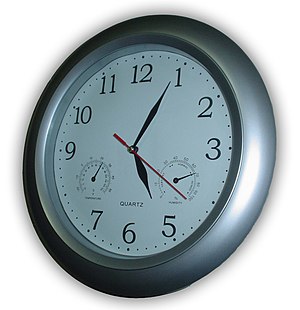
5-handed clocks
With A-One being turned off the clocks exercise, I re-read Norman Doidge's summary of the Arrowsmith school approach. A-One had been zooming through the 3-handed clocks, and had elected to go straight to Legendary level for his latest X-Box game, so I thought he might respond more positively to a greater challenge.

I decided to create a page of 5-handed clocks with the hands already on them. That meant that A-One had to read the times rather than write the times. Where the Arrowsmith school uses 1/60th second for the 4th hand, I instead used milliseconds and microseconds on two 'sub-' clocks within the main clock, because milliseconds and microseconds have practical application. I showed them to A-One after I had printed them out, and he once again stated emphatically that he wasn't going to do them.
I let that go so that A-One could do his Lumosity training first. I noticed that he's starting to use the 'pause' button on some of the games. Even though the image disappears during a pause, it gives him time to think. Also for one of the games, whenever he made a mistake, instead of continuing on with the game he went back to the start each time. So it seems to me that he is becoming 'hooked' on achieving good scores.
He's now over the 15th percentile overall, and his speed is over the 45th percentile. Memory and attention are around the 20th percentile, and flexibility a bit lower than that. Today he went down in problem solving, to less than the 2nd percentile. I've told him he needs to relearn his tables and number facts to improve on this one.
When he and his sisters were young, I used to play songs of tables in the car to school every day, and once upon a time he knew them all. At school the children weren't drilled on their tables like we were when I was at school, and I don't think any of my children would have learnt their tables but for those songs. For them it seems to have been use it or lose it.
I raised the new clocks exercise again:
A-One: No! I don't need to do them! I'm not going to do them! Two hands are all you need to read a clock ... I'm going to the toilet.
Fifteen minutes later (I measured it this time), he came back to resume his computer game.
Mum: Can I just show you how these clocks work, without you doing the exercises?
A-One: Alright.
I explained a millisecond, and a microsecond.
A-One: What do you need those for?
Mum: They are usually used in science, in laboratories, and sometimes to measure how long it takes to access data on computer discs.
Using the first clock as the training example, he made an error reading the hour hand but was able to correct himself when I pointed it out. He was willing to read the time on the second clock too.
Mum: How about the next one?
A-One: No! No more today!
Mum: How many milliseconds in a second?
A-One: 1000
Mum: How many microseconds in a millisecond?
A-One: 1000
Mum: Fantastic! You know, you're not slow in picking this up. Do you remember when you first started this only a couple of weeks ago that you didn't even know how to read the half hour? And look what you can do now! All you need is practice so that you can do it quickly. Like swimmers - most people know how to swim, but it's those who train and train who swim really fast.
By that stage I was talking to one ear - the other was already under the headset.

I decided to create a page of 5-handed clocks with the hands already on them. That meant that A-One had to read the times rather than write the times. Where the Arrowsmith school uses 1/60th second for the 4th hand, I instead used milliseconds and microseconds on two 'sub-' clocks within the main clock, because milliseconds and microseconds have practical application. I showed them to A-One after I had printed them out, and he once again stated emphatically that he wasn't going to do them.
I let that go so that A-One could do his Lumosity training first. I noticed that he's starting to use the 'pause' button on some of the games. Even though the image disappears during a pause, it gives him time to think. Also for one of the games, whenever he made a mistake, instead of continuing on with the game he went back to the start each time. So it seems to me that he is becoming 'hooked' on achieving good scores.
He's now over the 15th percentile overall, and his speed is over the 45th percentile. Memory and attention are around the 20th percentile, and flexibility a bit lower than that. Today he went down in problem solving, to less than the 2nd percentile. I've told him he needs to relearn his tables and number facts to improve on this one.
When he and his sisters were young, I used to play songs of tables in the car to school every day, and once upon a time he knew them all. At school the children weren't drilled on their tables like we were when I was at school, and I don't think any of my children would have learnt their tables but for those songs. For them it seems to have been use it or lose it.
I raised the new clocks exercise again:
A-One: No! I don't need to do them! I'm not going to do them! Two hands are all you need to read a clock ... I'm going to the toilet.
Fifteen minutes later (I measured it this time), he came back to resume his computer game.
Mum: Can I just show you how these clocks work, without you doing the exercises?
A-One: Alright.
I explained a millisecond, and a microsecond.
A-One: What do you need those for?
Mum: They are usually used in science, in laboratories, and sometimes to measure how long it takes to access data on computer discs.
Using the first clock as the training example, he made an error reading the hour hand but was able to correct himself when I pointed it out. He was willing to read the time on the second clock too.
Mum: How about the next one?
A-One: No! No more today!
Mum: How many milliseconds in a second?
A-One: 1000
Mum: How many microseconds in a millisecond?
A-One: 1000
Mum: Fantastic! You know, you're not slow in picking this up. Do you remember when you first started this only a couple of weeks ago that you didn't even know how to read the half hour? And look what you can do now! All you need is practice so that you can do it quickly. Like swimmers - most people know how to swim, but it's those who train and train who swim really fast.
By that stage I was talking to one ear - the other was already under the headset.
Labels:
analogue clocks,
Arrowsmith,
Arrowsmith school,
Arrowsmith-Young,
brain,
brain training,
Brisbane,
cognitive impairments,
computer games,
games,
learning disability,
Lumosity,
music,
neuroplasticity
Friday, November 16, 2012
I don't need to turn the music off!
I noticed that A-One was still up at his computer at 2:37am this morning, and he still had some washing up after dinner to do which would make his going to bed time even later (not an unusual occurrence)! Again I had no idea what time he went to bed.
So this morning when I had some other things to do, I let him sleep - to give him the best chance of working well on brain training after adequate sleep. (He had done the washing up.)
Late morning my husband called and after a brief conversation I mentioned that I was about to wake A-One. 'Good luck', he said.
A-One rose willingly enough and we talked about his next steps for today: breakfast, shower, dress, brain training. He came down for breakfast and turned on a James Bond movie while he ate (including last night's uneaten dinner). When I saw his empty plate, I reminded him about the next step. He decided he'd shower later at his 'usual' time. I asked him to give me a hoy when he was dressed.
After about 15 minutes (or so it seemed to me) I called out to him. 'Wait a minute!', he said. Fairly soon though he came downstairs, opting to work in the study today instead of his room.
As we were about to begin, I noticed that he had a YouTube music video playing as he brought up the Lumosity login screen.
Mum: Better turn off the music while you work.

A-One: I don't need to turn the music off!
Mum: It's important to be free from distractions while you work on your brain training.
A-One: It doesn't distract me.
Mum: How do we know that?
A-One: It doesn't!
Mum: How about we prove that?
A-One: I don't need to turn it off!
Remembering that he had had headphones on for all the other brain training this week, thinking it was to help him hear any sounds related to the brain training, I asked him whether he had had music on the other days.
A-One: Yes.
This revelation put me off balance. Freedom from distractability is part of being able to stay on task!
Mum: Will you try it without music just for today?
A-One, closing the music clip: There! You happy now?
There were a few more 'stupid' comments today ... the game of course, not A-One! He did much better on the vowels game now that he knows what they are. He's doing really well with the cafe orders, remembering everyone's name and giving all the correct orders. The good news is that while some of his scores were not his best, his overall comparative results show no category now in the 1st percentile! Today, memory and attention showed as his strong areas.
I Googled for the effect of music on cognitive performance. Several results came up, a recent one being http://www.usatodayeducate.com/staging/index.php/campuslife/should-you-listen-to-music-while-you-study.
So should I argue the case again tomorrow?
I might just ask him what music he plans to listen to, and then our negotiation might be on the choice of music instead. I imagine that calming instrumental music, rather than music with lyrics might be a better choice, especially when doing any language-based exercises.
So this morning when I had some other things to do, I let him sleep - to give him the best chance of working well on brain training after adequate sleep. (He had done the washing up.)
Late morning my husband called and after a brief conversation I mentioned that I was about to wake A-One. 'Good luck', he said.
A-One rose willingly enough and we talked about his next steps for today: breakfast, shower, dress, brain training. He came down for breakfast and turned on a James Bond movie while he ate (including last night's uneaten dinner). When I saw his empty plate, I reminded him about the next step. He decided he'd shower later at his 'usual' time. I asked him to give me a hoy when he was dressed.
After about 15 minutes (or so it seemed to me) I called out to him. 'Wait a minute!', he said. Fairly soon though he came downstairs, opting to work in the study today instead of his room.
As we were about to begin, I noticed that he had a YouTube music video playing as he brought up the Lumosity login screen.
Mum: Better turn off the music while you work.
A-One: I don't need to turn the music off!
Mum: It's important to be free from distractions while you work on your brain training.
A-One: It doesn't distract me.
Mum: How do we know that?
A-One: It doesn't!
Mum: How about we prove that?
A-One: I don't need to turn it off!
Remembering that he had had headphones on for all the other brain training this week, thinking it was to help him hear any sounds related to the brain training, I asked him whether he had had music on the other days.
A-One: Yes.
This revelation put me off balance. Freedom from distractability is part of being able to stay on task!
Mum: Will you try it without music just for today?
A-One, closing the music clip: There! You happy now?
There were a few more 'stupid' comments today ... the game of course, not A-One! He did much better on the vowels game now that he knows what they are. He's doing really well with the cafe orders, remembering everyone's name and giving all the correct orders. The good news is that while some of his scores were not his best, his overall comparative results show no category now in the 1st percentile! Today, memory and attention showed as his strong areas.
I Googled for the effect of music on cognitive performance. Several results came up, a recent one being http://www.usatodayeducate.com/staging/index.php/campuslife/should-you-listen-to-music-while-you-study.
So should I argue the case again tomorrow?
I might just ask him what music he plans to listen to, and then our negotiation might be on the choice of music instead. I imagine that calming instrumental music, rather than music with lyrics might be a better choice, especially when doing any language-based exercises.
Subscribe to:
Posts (Atom)