Thursday, November 29, 2012

No writing!

I woke A-One an hour earlier this morning and let him know the time for brain training.  I mentioned that I wanted him to try some alternative problem solving games, those that did not involve arithmetic, so that we could see how his problem solving goes when it's not about maths.

He brought up the login page at my request. After he worked through the games, grumbling that whoever wrote them is mentally challenged, we looked at his results. No PBs today; in fact he went down in 3 of the games.  However his speed is now over the 50th percentile at 52.6!  Overall he is at the 16.5th percentile.

When he completed the set games, I asked him to choose one of the non-maths problem solving games.  He had a choice between shapes and words, both of which required him to discern the hidden rule. He chose the shapes.

He read the rules of the game and saying it still didn't make sense he proceeded to play anyway.  The game requires the player to guess whether a shape fits the rule or not, so the first couple of tries is trail and error to discern the rule.  However when he got a 'X' on subsequent guesses, he consistently wanted to go back to the start.

Mum: You don't need to go back to the start each time you get one wrong.

A-One: I can't get any wrong.

Mum: It doesn't matter whether you get it wrong, because that's how you find out what the rule is.

A-One: No, I can't get any wrong.

Nevertheless, he seemed to be getting the hang of it, but wouldn't play it again.  I'll be very interested to see how he goes over the next week, as long as he's willing to add the game to his daily list.

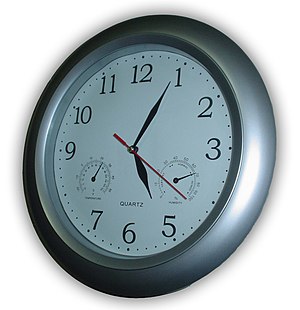
We then took up the clocks exercise to a familiar refrain. 'This is a waste of time.  I have better things to do,' as he sat down at the table.  He was willing to try 2 clocks only, taking a while to work them out and making several errors.

Mum: Where did you get the 47 (minutes) from?

A-One: It's correct!  That's what I say it is!

Mum: Let's count them up.

A-One (sighing): OK. It's 52.

After the clocks, we took the first couple of paragraphs from the Inquirer section of last weekend's The Weekend Australian.

A-One: I'm only reading as far as I want to.

...

Mum: Where did you read to?

A-One (without waiting for me to read): There.  It's saying that the government and people are spending as if nothing bad is going to happen to the economy, and the Prime Minister is saying Australia has a good economy.

Mum: OK. Now I want you to write that down.

A-One, quite vociferously: No! No! No! I'm not going to write it down!

Mum: OK.  I'm just letting you know that writing it down in your own words will be one of our future exercises.



Well do I remember the challenges A-One felt at writing his assignments when at school.  I recall one of his teachers wrote one of his assignments while he dictated.  She knew he knew the work and could see that writing it down was a barrier to his succeeding. This year's neuropsychologist's report also recommended something like Dragon Dictate if he needed to write assignments.
 
However, that's the compensatory approach. The Arrowsmith approach is to exercise, exercise, exercise the weak cognitive function.  I just need to find the right level of challenge so that he doesn't refuse.


Wednesday, November 28, 2012

3 PBs!

A-One fitted in his Lumosity training around computer games today.

He gained 3 PBs, one being the vowels game now that he knows what vowels are: 


Speed
Speed: 47.9th percentile!
Memory: > 20th percentile
Attention: ~20th percentile
Flexibility: 15.5th percentile
Problem Solving: <2nd percentile

We looked at his result trend for each category.
He 'I know Mum''d me when I started to comment that his attention seems to be plateauing.

His problem solving had been improving, but of late it's taken a dive.

Clocks exercise?  Not a chance.  The sage declared:  'I don't need to do it every day to get the results I want.'

Like last Wednesday, he received a phone call to come into work earlier than usual.  He hadn't remembered what time he left, or what bus he had to catch.  So he went through the exercise again - successfully.

5-handed clocks

With A-One being turned off the clocks exercise, I re-read Norman Doidge's summary of the Arrowsmith school approach. A-One had been zooming through the 3-handed clocks, and had elected to go straight to Legendary level for his latest X-Box game, so I thought he might respond more positively to a greater challenge.

I decided to create a page of 5-handed clocks with the hands already on them.  That meant that A-One had to read the times rather than write the times.  Where the Arrowsmith school uses 1/60th second for the 4th hand, I instead used milliseconds and microseconds on two 'sub-' clocks within the main clock, because milliseconds and microseconds have practical application. I showed them to A-One after I had printed them out, and he once again stated emphatically that he wasn't going to do them.

I let that go so that A-One could do his Lumosity training first.  I noticed that he's starting to use the 'pause' button on some of the games. Even though the image disappears during a pause, it gives him time to think.  Also for one of the games, whenever he made a mistake, instead of continuing on with the game he went back to the start each time.  So it seems to me that he is becoming 'hooked' on achieving good scores.

He's now over the 15th percentile overall, and his speed is over the 45th percentile. Memory and attention are around the 20th percentile, and flexibility a bit lower than that.  Today he went down in problem solving, to less than the 2nd percentile.  I've told him he needs to relearn his tables and number facts to improve on this one. 


When he and his sisters were young, I used to play songs of tables in the car to school every day, and once upon a time he knew them all. At school the children weren't drilled on their tables like we were when I was at school, and I don't think any of my children would have learnt their tables but for those songs. For them it seems to have been use it or lose it.


I raised the new clocks exercise again:

A-One: No! I don't need to do them! I'm not going to do them! Two hands are all you need to read a clock ... I'm going to the toilet.

Fifteen minutes later (I measured it this time), he came back to resume his computer game.

Mum: Can I just show you how these clocks work, without you doing the exercises?

A-One: Alright.

I explained a millisecond, and a microsecond.

A-One: What do you need those for?

Mum: They are usually used in science, in laboratories, and sometimes to measure how long it takes to access data on computer discs.

Using the first clock as the training example, he made an error reading the hour hand but was able to correct himself when I pointed it out.  He was willing to read the time on the second clock too.

Mum: How about the next one?

A-One: No! No more today!

Mum: How many milliseconds in a second?

A-One: 1000

Mum: How many microseconds in a millisecond?

A-One: 1000

Mum: Fantastic! You know, you're not slow in picking this up. Do you remember when you first started this only a couple of weeks ago that you didn't even know how to read the half hour? And look what you can do now! All you need is practice so that you can do it quickly. Like swimmers - most people know how to swim, but it's those who train and train who swim really fast.

By that stage I was talking to one ear - the other was already under the headset.


Monday, November 26, 2012

An online service and other links

Last night I was following up some of the organisations represented at Friday's workshop at UQ.  A partner of Synapse is The Developing Foundation based on Brisbane. It provides a link to neuro-developmental therapy programs which include online consultations and assessments.  The site refers to brain neuroplasticity and lists experience with developmental delay, global developmental delay, and PPD-NOS.  There appears to be a great deal of alignment between the online therapy programs and my objectives - do they also incorporate online brain training?

An Australian researcher into Autism, from Macquarie University in Sydney, blogs at Cracking the EnigmaMacquarie also hosts the ARC Centre of Excellence in Cognition and its Disorders (which doesn't list UQ as a collaborating or partner organisation.)  More leads to follow up.

Clocks are only for telling the time!

A-One duly completed his Lumosity training this morning.  He gained a new personal best for the flexibility game which requires him to recognise shapes, but continues to plateau (down actually) on memory and problem solving.  His speed is now over the 40th percentile, memory and attention up around the 20th percentile, but problem solving remains doggedly around the 2nd percentile. Overall he is over the 14th percentile for his age group.

When I mentioned moving on to the clocks and reading comprehension:

A-One: No! I know the clocks! I don't need to do any more clocks!

Mum: The next stage is to add a 4th hand.

A-One: No! I'm not doing any more clocks!

Mum: You realise it's about training that part of your brain that is good not just for reading clocks, but for other things too?

A-One: No! I don't need to do that!

Mum: OK. Well let's move on to some reading.

A-One: No! I don't need to do that either!

Mum: The reading this morning is different from last week's.  (I had planned to use the first paragraph from the Inquirer section of The Weekend Australian.)

A-One: No! My reading's OK.

Mum: Do you realise why we're doing this?  To improve your chances of getting a job so that you can keep yourself - especially after we're gone? What will you do then?

A-One: I don't know. I don't want to talk about it anymore!  Stop trying to make me do it!

A-One immediately brought up RuneScape and started telling me more about a feature that he'd pointed out to me yesterday.

Sunday, November 25, 2012

Games, games & bills

Over the weekend A-One completed his daily brain training with Lumosity.  His BPI continues to steadily increase, with improvements in speed, memory, attention, and flexibility, but his problem solving remains determinedly around the 2nd percentile. By Sunday, his speed was almost at the 40th percentile, although he may be plateauing for memory.

 
He was telling me about his progress with his latest game purchase, Halo 4.  Playing it on the X-Box because his laptop is still out of action, he was explaining that there are four levels: Basic, Standard, Heroic, and Legendary.  He decided to start at Legendary and is already up a couple of levels! (Although he says it takes longer to complete a game.) Not content with restricting himself to the X-Box, he is also using another computer to play the online game Runescape.


As an aside, he was asking about how some online payments work, and noticed his board payment in  the transaction statement for his bank account.  We took this opportunity to talk about some living costs, using a household bill as an example. I don't have much confidence that any of it registered, however we'll keep trying to share cost of living realities with him, hopefully to provide increased motivation for brain training.

Objectives: Best Practice AND Online

On Friday I attended an all-day workshop at the University of Queensland for Research Officers working in NGOs. Its purpose was to build capacity for research in the Human Services NGO sector, through building relationships between the University's researchers and the service providers/practitioners in the Human Services sector.

I don't work for an NGO, however my interest was to discover more about how research works in the Human Services sector, access to funding for research, and how that might be applied so that specific, targeted brain training becomes more accessible.

I found it a very worthwhile day, meeting people working in the NGO sector and researchers from UQ.  In particular I met people from Synapse, the not-for-profit association supporting people with acquired brain injury (ABI), and the Centre of Excellence for Behaviour Support from UQ (based in Ipswich).


The latter is funded jointly with the Queensland Government to improve the quality of life for adults with intellectual or cognitive disability and challenging behaviour.   This group has developed a framework for developing a comprehensive research agenda for people with intellectual disability and challenging behaviours.  I learnt that the focus of this group is on positive behaviour support, especially for people with severe intellectual and cognitive disability. It sounded like it would be a stretch for that group to turn its attention to those with mild cognitive impairment.  However, the framework for developing a comprehensive research agenda may be a good base from which to start in developing a research agenda for people with milder cognitive impairments.

Based on what I learnt from the workshop, I have drafted my own vision to improve the services available to people who fall between the cracks of 'normal' cognitive ability and severe cognitive disability. How many people are on the disability pension, possibly on supported wage, who with some effective intervention to overcome their cognitive impairments, could move into gainful employment and eventually off, or receive reduced, government support?

My two objectives are:

Objective 1: Evidence-based brain training exercises become incorporated into best practice treatment options for cognitive impairments

Objective 2: Evidence-based best practice cognitive assessments and correlated brain training exercises become more widely accessible through online delivery


I have begun developing the compelling 'why' for various stakeholders:
  • People with cogntive impairments
  • Carers
  • Human Services Providers/Practitioners
  • Health Care Practitioners/Specialists
  • Educational Services
  • Government - Political
  • Government - Administrative
  • Employers/Business
  • Community/Society

Also the How? and the Who?

I learnt that evaluation (efficacy) measures need to be determined collaboratively to incorporate user, practitioner, and researcher perspectives.

...

I wasn't at home on Friday, so no brain training happened for A-One, despite his insistence that I don't need to be there while he does it.